
If you look closely at your hair extensions, do you see tiny white bulbs at the ends?
Those white bulbs are hair follicles—the roots. Spotting them is a straightforward way to uncover how the hair was collected, serving as a key hair quality indicator that can save you from buying subpar bundles.
In my years sourcing and testing hair extensions, I’ve examined thousands of samples, and follicles have become one of my go-to “tells.” They reveal the true story behind your hair—from ethical sourcing to sneaky factory shortcuts.
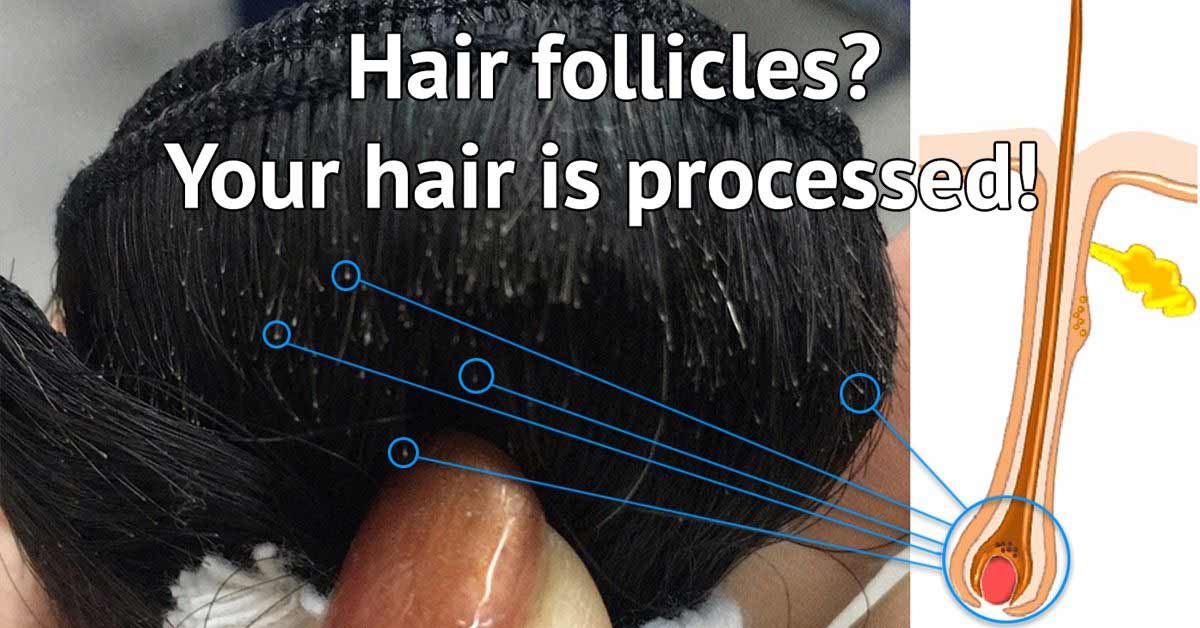
Table of Contents
Why Raw Hair Shouldn’t Have Hair Follicles
To understand why these bulbs matter, you have to visualize how raw hair extensions are sourced.
Imagine a girl in a rural village who wants to sell her hair for money. A collector comes by, ties her hair into a ponytail, and cuts it off with shears. Because the hair is physically cut, the root stays exactly where it belongs—anchored in her scalp, ready to grow new hair.
The result? You get a bundle with clean, blunt ends. There are no bulbs because the hair was never pulled out by the root. This method naturally keeps the cuticles aligned in one direction, ensuring the hair remains smooth and tangle-free without needing heavy chemical processing.
Why Floor Hair Has Follicles
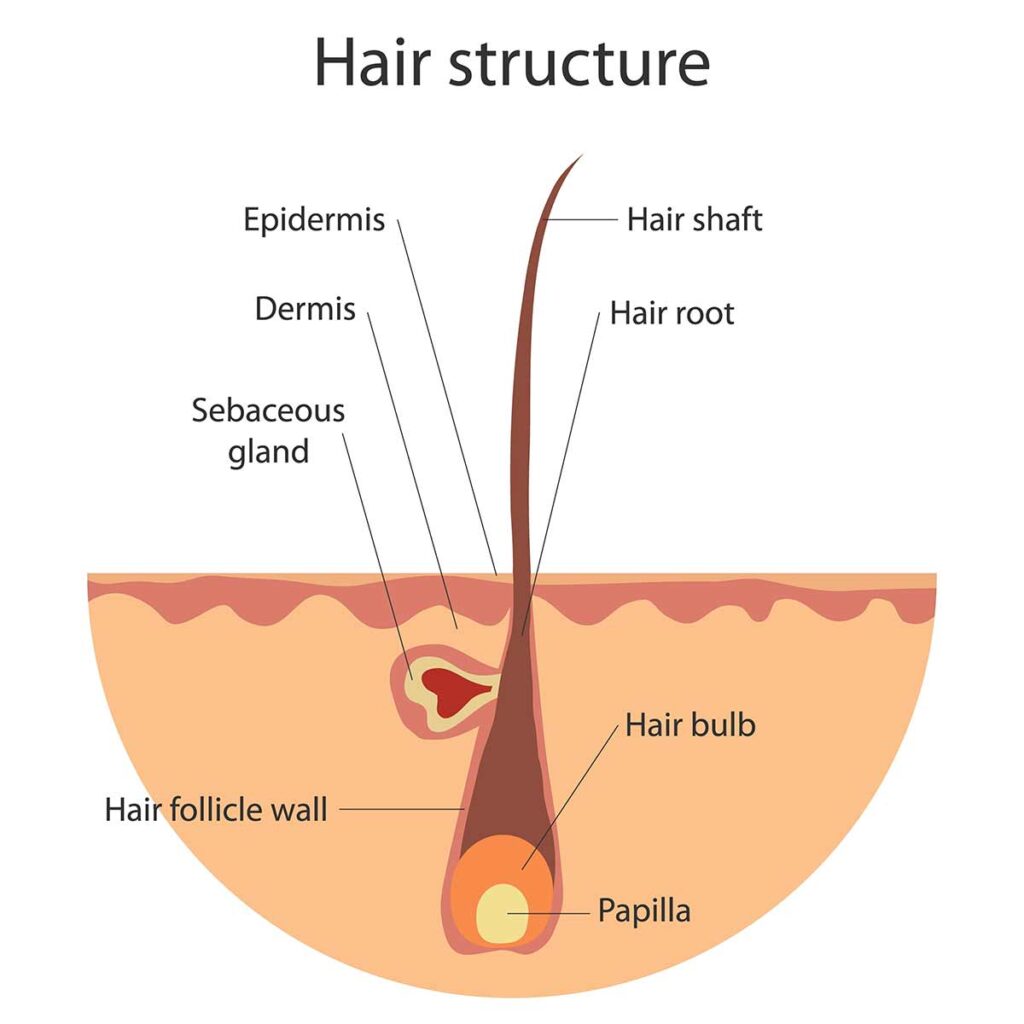
Now, compare that to floor hair. This is hair that has fallen out due to natural hair loss. Since it sheds naturally, the root bulb comes out with the strand.
While we often say it’s collected from the floor, it is actually collected from hairbrushes, shower drains, or literally swept up from floors in households and salons. Because it wasn’t cut from a head and still has those white bulbs attached to it, it is a dead giveaway that the hair isn’t donor hair.
And while it sounds like a ton of work… China has about 1.4 billion people. In the same way it takes a village to raise a child, it takes 1.4 billion people to become a major hair supplier.
A Note on Indian Temple Hair: Not all floor hair has follicles. In India, devotees shave their heads at temples to renounce their vanity and seek blessings from the gods. Since the hair is shaved off, the bulbs stay behind. However, because not all hair in all temples is bound before shaving, a lot of it still ends up without aligned cuticles.
Why Hair Extensions With Follicles Are Processed
The biggest issue with this material isn’t the bulb itself—it’s the cuticle alignment.
When hair is gathered from a brush or a pile, the strands are non-remy. Some roots face up, some face down. If you left it like this, the opposing cuticles would lock together like Velcro, causing instant matting.
To fix this, factories have two main options:
- The Machine Method: They run the hair through a “non-remy to remy” machine, which attempts to align the hair. If they do this, you will often find the white bulbs concentrated at the base (weft) of the bundle.
- The Acid Bath: They soak the hair in acid to strip the cuticles off entirely. This solves the tangling, but it is quite damaging to the hair. When they do this, you will typically find hair follicles distributed 50/50 at both the base and the ends.
Note: Don’t let vendors scare you about “silicone.” Almost all hair, even high-end raw hair, has some silicone coating. While it can be used to make bad hair feel and look good, it can also be used to make great hair feel softer.
Conclusion
Finding hair follicles is a useful shortcut for spotting shortcuts.
- Raw Hair: Shouldn’t have any follicles.
- Processed/Floor Hair: Often still retains the bulb.
Is it foolproof? No. A factory can easily snip the bulbs off to hide the evidence. But if you do see them, you know immediately that you aren’t looking at the high-end donor hair the vendor promised. It’s a quick, free check that becomes useful from time to time.
Frequently Asked Questions (FAQ)
What Do White Bulbs on Hair Extensions Mean?
They are roots from naturally shed hair, indicating the hair was likely collected as floor hair rather than cut from a donor.
Does Floor Hair Always Tangle?
It will tangle if unprocessed. Factories usually solve this by stripping the cuticles with acid, which makes the hair smooth initially but reduces its longevity.
Why Do Chinese Factories Prefer Chinese Floor Hair?
Chinese hair is naturally coarser than Indian hair. This thickness allows it to withstand the acid baths and processing required to turn floor hair into usable extensions without breaking down.
Many of our articles originate on our Facebook. Follow us there to learn more about the hair industry. You can contact me directly by sending me a message on WhatsApp or iMessage: +86 135 3369 3283.