
Frizzy hair extensions can be aggravating, and many people are unaware of why this happens. In this article, we’ll explain why this occurs, how you can use it to tell the difference between high-quality hair and chemically processed floor hair, and how to deal with it.
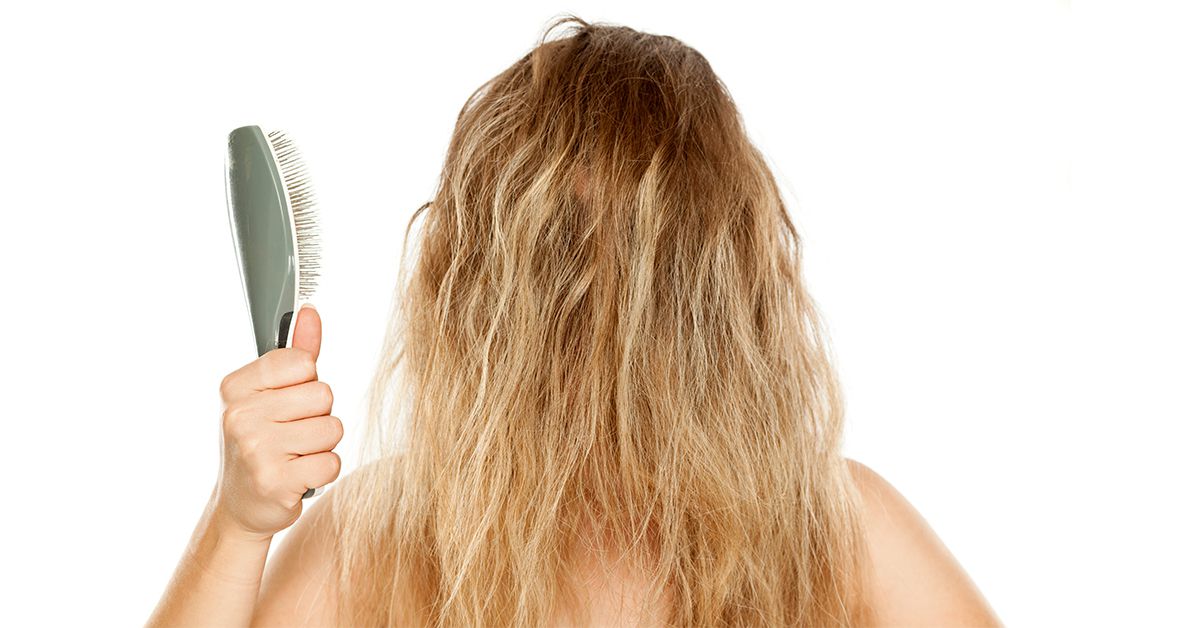
Table of Contents
What causes frizzy hair? It’s All About The Cuticles
If you cut hair directly from a donor’s head, all the cuticles will be in the same direction. This is important to know, as when the cuticles aren’t aligned, the hair would tangle. That’s why this type of hair will get an acid bath to remove some of the cuticles. Obviously, the acid bath will damage the hair. Damaged hair is porous and unable to retain its natural moisture levels. It will easily absorb water, especially in high-humidity environments. That’s why many people’s hair becomes frizzy after washing it or going to the beach.
Frizzy hair can help you achieve the desired 80s look by adding volume to your curly hair. Others associate frizzy hair with a bad hair day and will go to any length to control frizzy hair. However, we’re talking about hair extensions, not your natural hair. When you wash newly purchased hair extensions, and they become frizzy, you can be certain that the hair has been damaged during processing. Real cuticle-aligned hair is not damaged and does not become frizzy, while processed floor hair will.
Many suppliers and distributors choose to sell low-quality hair extensions under the raw hair label while claiming to have the best hair extensions available. However, once you receive your newly purchased bundles, you can simply wash them to see if they become frizzy. If they become frizzy, they are not of the highest quality.
Manufacturers frequently use silicon products on their hair extensions. It enhances their appearance and provides that initial wow factor when you first receive your extensions. It’s done to both unprocessed and processed hair, and it’s not necessarily a bad thing. However, it has the potential to obscure the natural behavior of damaged and processed bundles. So, when you test your hair by washing it, make sure to use shampoo multiple times to remove any potential silicon and remnants of other products. This implies that silicon-based products are one answer to the question of “how to stop frizzy hair.”
In the video below, we perform this test on a bundle with full and aligned cuticles, a bundle with a mix of unprocessed and processed hair, and a bundle of processed floor hair. The more damaged the hair, the more frizzy it becomes. Along with the acetone and bleaching tests, this is a great way to test your hair extensions when you first get them.
How to prevent frizzy hair extensions?
The best way to deal with heat-damaged hair is prevention. It’s best to start with buying unprocessed hair extensions from a reputable supplier. This type of hair is mostly undamaged, and will not become frizzy.
Avoid using heat
High heat alters the shape of your hair’s keratin strands. Temperatures above 300°F can convert ⍺-keratin to β-keratin, resulting in weaker, less elastic hair, that is more prone to damage. When the keratin is melted, your hair retains that shape on a molecular level, and this is irreversible. This damage causes an increase in porosity, which causes frizz. So try to stay between 200 and 300°F.
A heat protectant is one of the most important treatments for heat-damaged hair you can apply. These are available in various forms, including sprays and creams. They create a barrier between your hair and the hot styling tools, allowing you to blow-dry and style your hair without fear of further damage. Heat protectants can be used on wet or dry hair.
The damage done to your hair is cumulative. Regular use of hot tools at high temperatures prolongs changes to the protein bonds and moisture content of each strand. These bonds are destroyed, and hair becomes hydrated in an irreversible manner. If you continue using hot tools, the damage progresses as well.
Avoid over-processing hair
Overprocessed hair is typically the result of improper or excessive use of dye, bleach, perms, and hair relaxers. When your hair is overprocessed, the strands become porous and dense, making styling and maintenance more difficult. All visible hair on your head are dead cells, and overprocessed hair cannot be repaired completely.
How do you get rid of frizz in your hair extensions?
Damage to your hair extensions is irreversible. Once the protein bonds have been broken and the cuticles have cracked, the cortex will be susceptible to all types of damage. That’s why your frizzy hair often becomes brittle and loses elasticity. However, if your hair is currently experiencing damage, there are steps you can take to manage it.
Hair care tip #1: Cut your hair
There are different levels of damage. It takes approximately 5 years to grow 30″ of hair, and it is normal for hair to become slightly damaged the longer it gets. Damaged hair starts to split at the ends where the hair is oldest and has experienced the most damage, but those splits can move up the hair shaft splitting multiple times, making the damage worse. If the damage is mainly contained to the ends, cutting off 1 or 2 inches will be a potential fix.
Hair care tip #2: Switch your haircare products
Switch to sulfate- and paraben-free products designed specifically for damaged hair. Shampoos, conditioners, and leave-in conditioners for damaged hair replenish moisture, aid in the repair of broken protein bonds, and prevent getting frizzy hair. If you normally wash your hair every day, consider extending the time between washes to allow some of the natural oils to build up and create a protective barrier for your hair.
Hair care tip #3: Carefully handle wet hair
Because your hair is most vulnerable when wet, it is critical to handle wet hair with care. Consider using a microfiber towel or a t-shirt instead of a regular hair towel to blot the excess water out of your hair. Instead of brushing wet hair, use a wide-tooth comb and avoid tugging, especially if you come across a knot or tangle. If your hair is extremely tangled, use a detangler before combing.
Hair care tip #4: Do a weekly hair mask
Damaged hair has become severely dehydrated because the moisture is stripped from your hair each time you use a blow dryer, flat iron, or curling iron at a high heat setting. A moisturizing hair mask can help rehydrate your hair and prevent frizzy hair. Apply the hair mask once or twice a week and leave it on for 20 to 30 minutes before rinsing. You can also use a hair mask at night and sleep with it before rinsing it out in the morning.
If you want to try it out, you can order our free hair sample. When you wash our Black Line it will get frizzy, but our Orange Line will not.
We have a large selection of products, and if you want to see them, follow us on Instagram.
Do you have any questions? Please do not hesitate to contact us! Do you have any suggestions? Please do not hesitate to give us! Do you want to experience real high-quality hair? Now is the time to order our samples or bundles!
WhatsApp: +86 135 3369 3283
Email: [email protected]
Facebook: https://www.facebook.com/bossique
2 thoughts on “Frizzy hair extensions: One clever method to determine quality”