
In this article, we delve into the resilience and robustness of hair, focusing on how chemical processing influences its natural elasticity and overall hair strength. Overprocessing can significantly reduce hair strength, making strands more vulnerable to damage.
Therefore, a key method for assessing hair strength is the break test, an essential tool that offers insights into the structural integrity and resilience of hair strands. This test is crucial for evaluating the quality of both processed and high-end hair, ensuring that hair maintains its strength and vitality.
Table of Contents
The Role of Elasticity in Hair Strength
The strength of hair lies in its elasticity, and the ability to stretch and return to its original shape. This remarkable property allows hair to withstand tension and support weight, making it resilient and durable. However, when subjected to chemical processes such as stripping cuticles in acid or bleaching, hair’s natural structure can be altered, diminishing its elasticity and compromising strength.
Understanding Quality Through the Break-Test
One effective method of assessing hair quality is through the break test, a technique that measures the hair’s resistance to breakage. By applying tension to a strand of hair until it breaks, we can gauge its strength and elasticity. High-quality hair will exhibit greater resilience, resisting breakage even under significant pressure.
To do the test, take a single strand of hair from your bundle, about 5cm or 2 inches apart, and gently pull. Healthy hair will stretch, okay hair will not stretch as much but won’t break, while overprocessed hair will snap. Or simply copy what I do in the two videos below.
Break-Test for Processed Floor Hair
Processed floor hair, often subjected to harsh chemical treatments, may experience a loss of elasticity due to the stripping of cuticles during processing. In our demonstration with the Black Line hair, we highlight how even processed hair can retain strength when sourced from high-quality materials and undergo mild processing. This showcases the importance of starting with superior raw materials to maintain hair integrity despite processing.
Break-Test for High-End 613 Bundles:
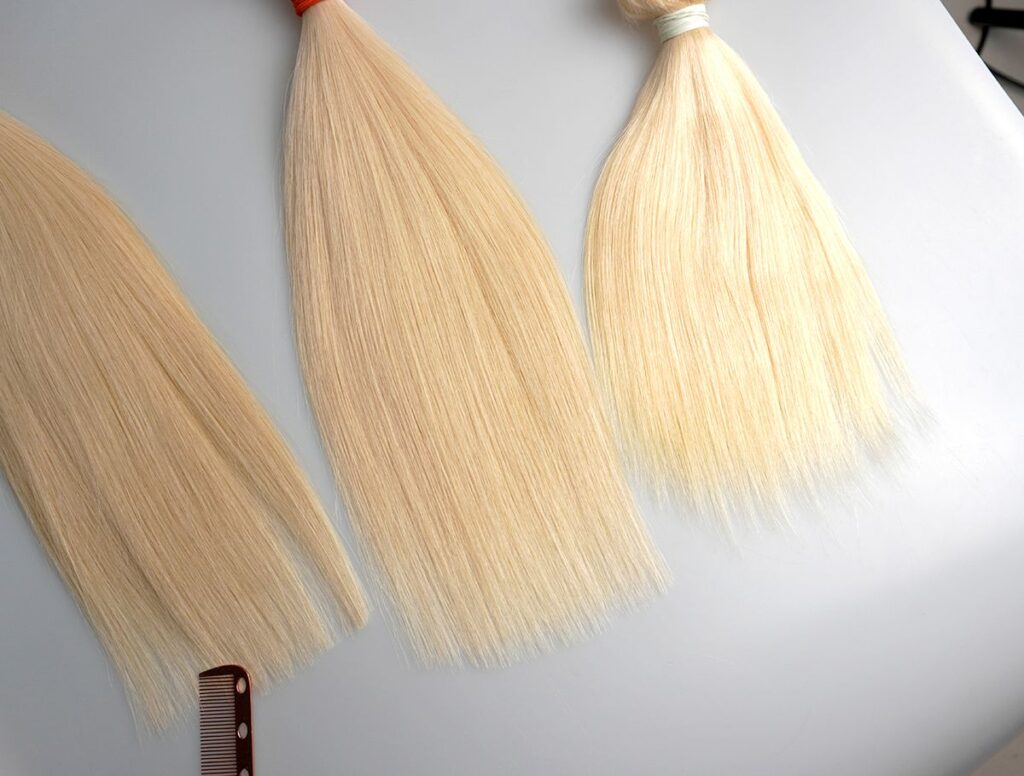
In contrast, we examine the impact of processing on 613 hair, a popular choice for its vibrant blonde color. We compare bundles made from subpar raw hair with those crafted from the purest hair material available. Through our demonstration, we illustrate the stark difference in strength and elasticity between these two types of 613 hair, emphasizing the importance of quality sourcing and processing methods.
Conclusion
Elasticity serves as a critical indicator of hair strength and quality, with chemical processing playing a significant role in its alteration. By understanding the relationship between processing, elasticity, and quality, consumers can make informed choices when selecting hair products. Whether testing processed floor hair or high-end 613 bundles, the break test offers valuable insights into hair integrity and serves as a reliable tool for quality assessment.
WhatsApp: +86 135 3369 3283
Email: [email protected]
Facebook: https://www.facebook.com/bossique/
Questions & Answers
How can I test if my hair is overprocessed?
One way to test for overprocessed hair is to perform a simple break test. Take a single strand of hair and gently pull it. Healthy hair will stretch before breaking, while overprocessed hair may snap easily. Additionally, overprocessed hair may exhibit signs of dryness, brittleness, and excessive frizz.
What is the break test for hair?
The break test is a method used to assess the strength and resilience of hair strands. By gently pulling a single strand of hair, you can determine its elasticity and likelihood of breakage. Healthy hair will stretch before breaking, while overprocessed hair may snap easily.
How does chemical processing affect hair strength?
Chemical processing, such as bleaching or stripping cuticles, can alter the natural structure of hair and diminish its strength. Overprocessing can lead to a loss of elasticity, making hair more prone to breakage and damage.
What is the significance of hair elasticity?
Hair elasticity is crucial for its ability to withstand tension and support weight. It indicates the health and resilience of hair strands. Elastic hair is less likely to break or become damaged during styling or chemical treatments.=
How can I assess the quality of hair products?
The break test is an essential tool for evaluating the quality of hair products. By testing the elasticity of hair strands, you can determine the integrity and strength of the hair. High-quality hair will exhibit greater resilience and elasticity.
What is the difference between processed floor hair and high-end hair?
Processed floor hair often undergoes harsh chemical treatments, leading to a loss of elasticity and strength. In contrast, high-end hair is sourced from superior raw materials and undergoes mild processing, maintaining its integrity and resilience.